
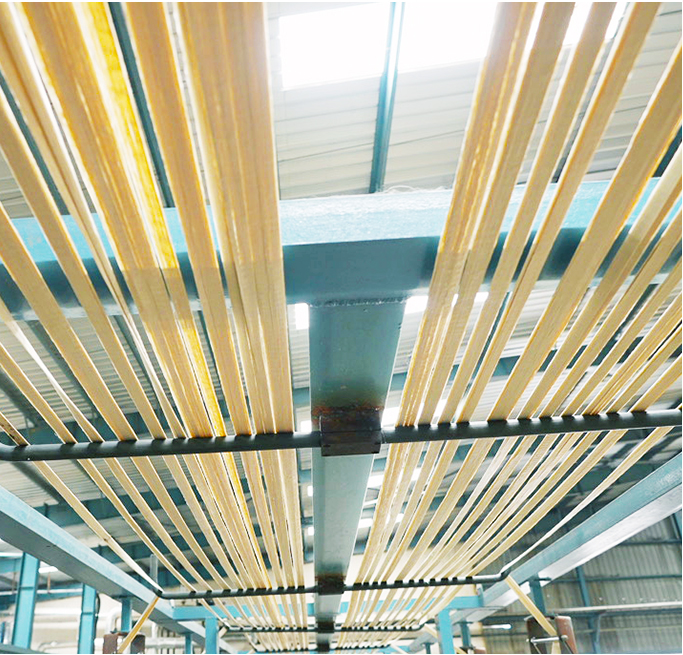
At SPNG, we have always championed the protection of our precious planet. And that is why, we worked relentlessly to create a recycling process where plastic waste can be turned into niche and fashionable garments that are environment-friendly!
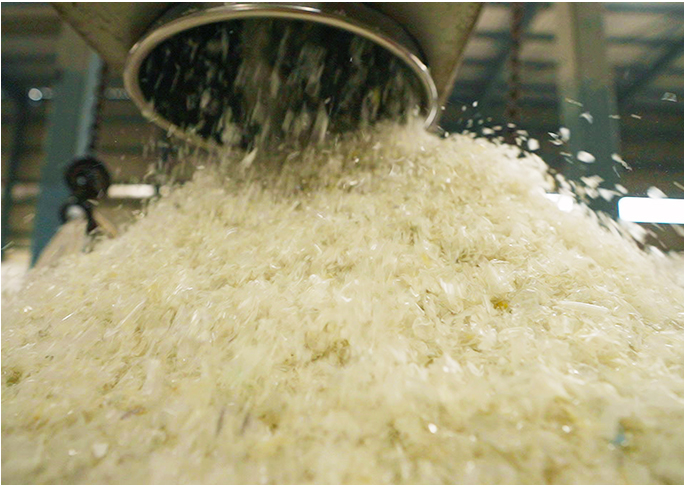
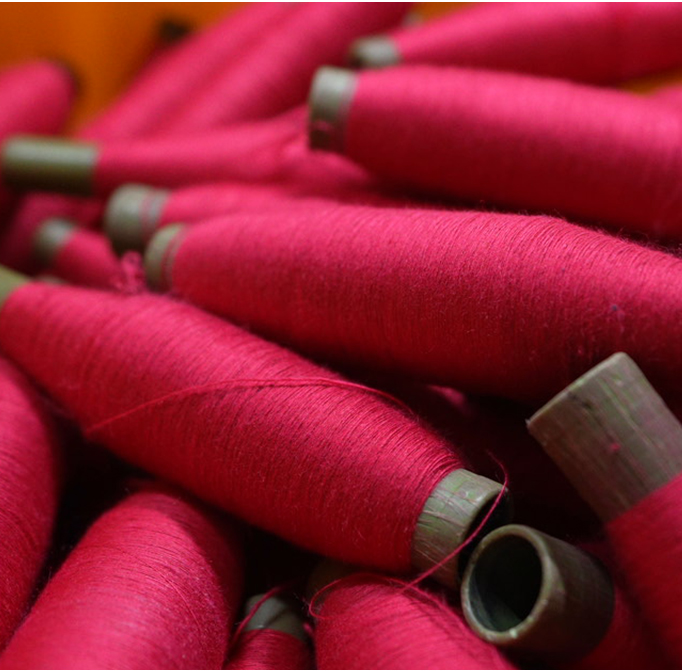
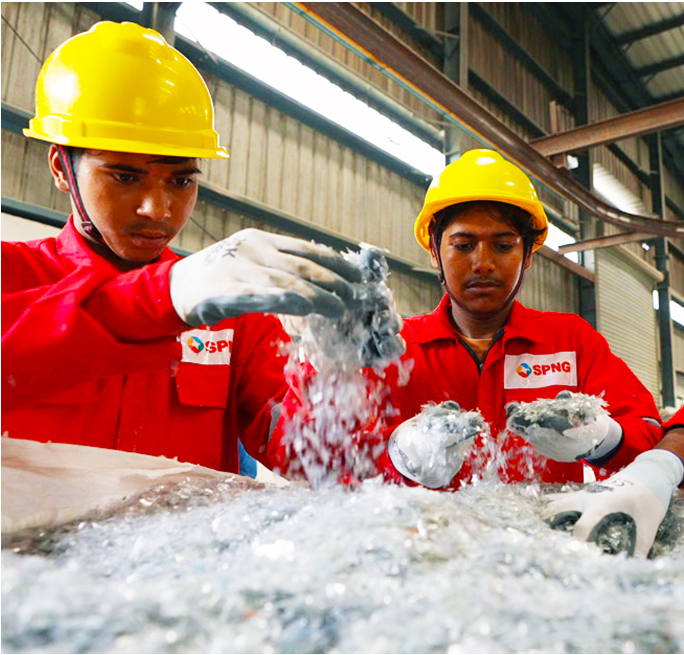
After the shredding process, which undergoes rigorous testing to meet approved quality standard, the PET bottles are converted into chips or flakes which are used for the manufacturing of rPSF. The rPSF flakes can be used in home textile, knitwear, technical textile, or can be converted into high-quality yarn for usage in creating premium fabric garments.
PET or Polyethylene Terephthalate is a plastic resin and the most common type of polyester which was discovered in 1941 in England. Two monomers named ‘modified Ethylene Glycol’ (MEG) and ‘purified Terephthalic acid’ (PTA) are combined to form the Polyethylene Terephthalate.
PET plastic can be recycled multiple times and into many forms such as bottles, fiber for home textile, technical textile, medical textile, GEO textile, t-shirt fabric, or fiber fill for fleece jackets, winter coats etc.

Eco-friendly Manufacturing Processes

Mix of rPSF and cotton in select ratio for wearing suitability

Soft-feel fabric with good water absorption

Different styles to suit various occasions and purposes

Multiple applications like leisure wear, sports-wear, formal jackets, etc.
In addition to reducing greenhouse gas emissions, recycling plastic water bottles also helps decrease the amount of pollution in the air and water sources. Many landfill facilities incinerate plastic bottles to save waste, which emit toxic pollutants or irritants into the air. The plastic resin used to make water bottles also contains potentially harmful chemicals which seep into the soil or groundwater if they break down in the landfill.
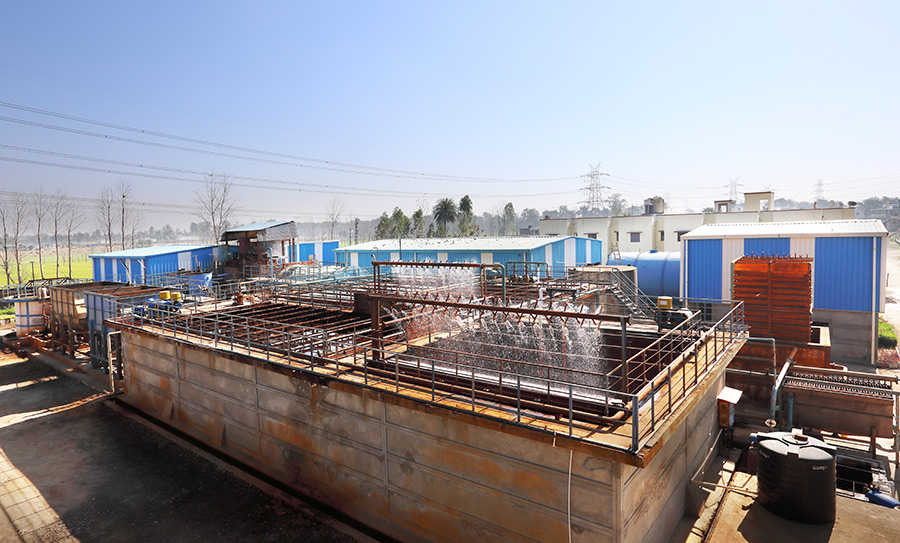
At our plant we are treating effluent water and recycling /re-using 95% of the treated water in the process again. This help in conservation of water,which is now a days becoming scare Commodity.
The plastic manufacturing process results in the creation of greenhouse gases, including carbon dioxide, which is thought to contribute significantly to global warming. Since the process for recycling plastic water bottles requires less energy and fossil fuels, it also results in fewer greenhouse gas emissions.
Every day, we contribute to environmental protection by recycling 5 million PET bottles; aa approximate equivalent of 10,000 sq.m. piece of land.
Recycling PET bottles helps conserve natural resources, specifically oil, which is a non- renewable natural resource, available only in limited supply. The Environmental Protection Agency (EPA) estimates that recycling one ton of plastic conserves approximately 600 Ltr of crude oil.
The PET fiber is made from PET bottles. The products made from PET fiber are economical in price and
Fulfill all the basic necessities of citizens of India. The textile industry provides one of the most basic
Need of people at a reasonable price and is important by virtue of maintaining sustained growth for an
Improved quality of life. Manufacturing PET-based fiber from PET bottles is very cost-effective. It can
Attract the international market, thereby increasing demand. Through the production of more fiber, we
Can avail the opportunity to export more PET products to international markets on a long-term basis.
Creating new materials from existing materials uses significantly less energy than the use of new raw materials. According to the Environmental Protection Agency (EPA), recycling one pound of Polyethylene Terephthalate (PET), the plastic most used in water bottles, conserves approximately 12,000 BTUs (British Thermal Units) of heat energy. The recycling process uses up to two-thirds less Energy than traditional manufacturing, significantly reducing the strain on the traditional power grid, which is based on the burning of fossil fuels. The energy saved by recycling a single plastic bottle is enough to power a 60-Watt light bulb for 6 hours. 90% less water is used in making recycled polyester versus virgin polyester and around 70% of the bottle weight can be transformed into finished textiles.
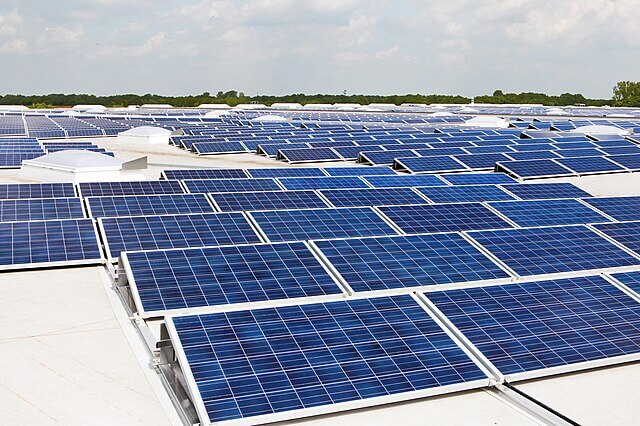
We have installed solar panels to generate power from infinite source of solar energy. This has helped us to save previous power supplies by state Government generated from depleting natural resource that is coal.